As the world shifts towards sustainable energy, solar panels have gained significant attention. A key question remains: What is the best angle for solar panels? This specific angle can greatly influence the efficiency and output of solar systems. Understanding sunlight’s path and its variations during different seasons is critical for maximizing energy capture.
Solar panels should be tilted to match the latitude of the installation location. Generally, a steeper angle works better in winter, while a flatter angle is effective during summer. However, this is not a one-size-fits-all solution. Each location has unique factors, such as local weather patterns and shading from nearby structures.
Experts recommend periodic adjustments based on seasonal changes. This allows solar panels to harness the maximum sunlight throughout the year. Yet, many overlook this, resulting in suboptimal performance. Taking time to assess these factors can enhance solar energy production, leading to better efficiency and energy savings over time.
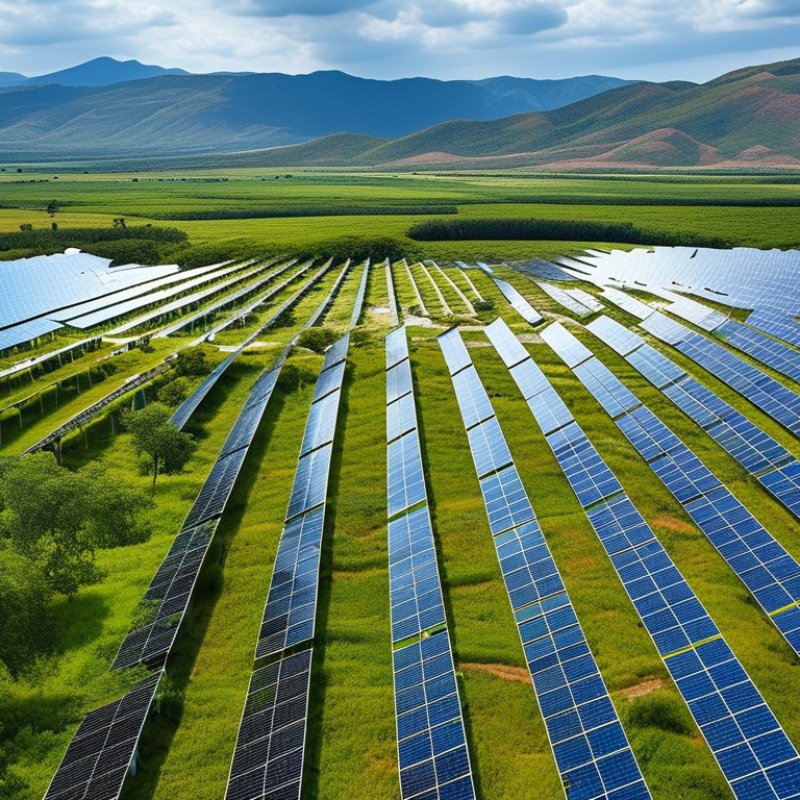
Understanding Solar Panel Orientation and Tilt
When determining the best angle for solar panels, the orientation and tilt play crucial roles. Solar panels should generally face true south for maximum exposure. However, geographical location can influence this. Areas closer to the equator benefit from a lower tilt angle, while regions further north or south may require a steeper angle. Adapting to local climate conditions is essential for efficiency.
Tilt angles are not one-size-fits-all. A common recommendation is a tilt angle equal to the latitude of your location. Yet, during seasons like winter, adjusting the angle can capture more sunlight. This approach may not always prove effective. Testing various angles can lead to unexpected results. Some installations might not yield optimal performance, prompting a reevaluation of panel setup.
Understanding your specific circumstances is vital. Consider potential obstructions, like trees or buildings. These can cast shadows on solar panels, reducing their effectiveness. Experimentation with angles and orientations highlights the importance of ongoing assessment. Calibration can lead to significant improvements in energy output over time. Balancing theoretical knowledge with actual performance can uncover a more accurate solution.
Factors Influencing Optimal Solar Panel Angle
The angle of solar panels plays a crucial role in energy generation. Various factors influence the optimal angle for solar panels. One key factor is geographical location. Areas closer to the equator typically benefit from less variability in sunlight throughout the year. For these locations, a fixed angle that is close to the latitude can be effective.
Seasons also impact energy production. In winter, the sun is lower in the sky, so panels may need to be tilted at a sharper angle. Conversely, in summer, a flatter angle could be more beneficial. This seasonal adjustment allows solar panels to capture maximum sunlight. Weather patterns can further complicate these decisions. Frequent clouds or rain may reduce overall efficiency, making angle adjustments less impactful.
Importantly, the type of solar technology used matters too. Some panels are designed to track the sun's movement throughout the day. This creates more complexity in angle calculations. It may not always lead to increased energy efficiency. This inconsistency calls for careful analysis and monitoring of specific conditions. A one-size-fits-all approach rarely applies. Each solar setup may need a unique strategy for the best results.
What is the best angle for solar panels to maximize energy? - Factors Influencing Optimal Solar Panel Angle
| Location (Latitude) |
Optimal Angle (Degrees) |
Seasonal Adjustment |
Efficiency Gain (%) |
| 0° - 10° |
10 |
+5 |
8 |
| 11° - 20° |
15 |
+8 |
10 |
| 21° - 30° |
20 |
+10 |
12 |
| 31° - 40° |
25 |
+12 |
15 |
| 41° - 50° |
30 |
+15 |
18 |
| 51° - 60° |
35 |
+18 |
20 |
| 61°+ |
40 |
+20 |
25 |
Calculating the Best Angle for Different Climates
The angle of solar panels greatly impacts energy efficiency. Each region has different weather patterns and sun positions. Finding the best tilt angle is key for maximizing energy production.
In temperate climates, a tilt angle of 30 to 45 degrees is often effective. This allows for optimal exposure during both summer and winter. Areas closer to the equator might benefit more from a flatter setup. A lower tilt angle captures more sunlight year-round, especially in regions with high sun exposure. Adjustments may be necessary depending on seasonal changes.
For regions with frequent snow, a steeper angle can help prevent accumulation. However, this may not be ideal in areas with heavy rainfall, where a flatter angle can prevent water from pooling. Always consider local conditions when making decisions. The right balance is often subjective and requires ongoing adjustments based on observations and results. It’s a trial-and-error process, and not always straightforward.
Seasonal Adjustments for Maximum Solar Efficiency
To maximize the energy output of solar panels, seasonal adjustments are critical. The optimal angle for solar panels greatly depends on geographical location and seasonal variations. In winter, a
steeper angle captures more sunlight, especially in regions with lower sun elevation. Meanwhile, a flatter angle in summer allows panels to harness sunlight when the sun is high.
According to the National Renewable Energy Laboratory (NREL), adjusting the angle seasonally can yield up to a 20% increase in energy production.
Data shows that in the United States, an average tilt of 30 degrees during winter is recommended, while adjusting to a 15-degree tilt in summer can significantly enhance efficiency.
However, many homeowners neglect these adjustments. This oversight can lead to underperformance, leaving potential energy savings untapped. The ideal angle can vary even within small regions, making local weather patterns an important factor.
Moreover, energy output is also influenced by shading and dirt accumulation. Routine maintenance is often overlooked but essential for consistent performance. A system that is dirty can lose up to 25% of its efficiency.
This highlights the need for ongoing vigilance in solar energy management. Adjusting angles seasonally is just one part of a larger strategy to ensure maximum efficiency in solar energy production.
Common Misconceptions About Solar Panel Placement
When considering solar panel placement, many believe that a fixed angle is ideal. However, this is often a misconception. Experts recommend that solar panels should ideally be tilted about 30 to 45 degrees, depending on your latitude. Data from the National Renewable Energy Laboratory indicates that this tilt can boost energy capture by 20% to 40% compared to flat installations.
Another common misunderstanding is that panels should always face south. While this is true for many regions, east and west-facing panels may actually outperform south-facing ones in certain areas. Research shows that in winter months, east-facing panels can receive more sunlight in the morning, potentially capturing more energy when demand spikes. It’s essential to analyze local conditions, such as shading and seasonal sun paths.
Homeowners should also be cautious about overestimating the impact of optimal angles. Many neglect site-specific factors like roof pitch and any obstructions. Even the best angle won’t compensate for shadowing or poor weather conditions. Understanding local climate patterns can reveal when and where your panels will perform best, leading to more informed decisions.
FAQS
: Geographic location, seasons, weather patterns, and solar technology influence the optimal angle significantly.
In winter, a sharper angle captures low sun. In summer, a flatter angle maximizes exposure.
A tilt angle between 30 to 45 degrees often works best for summer and winter energy efficiency.
Yes, seasonal adjustments can increase energy production by up to 20%. Neglecting this can lead to underperformance.
Frequent weather changes, like heavy rain or snow, may require different angles to optimize performance and prevent issues.
Regular cleaning and monitoring are vital. A dirty panel can lose up to 25% of its efficiency if not maintained.
No, angle optimization is unique for each setup. Different conditions require tailored strategies and ongoing adjustments.
Yes, tracking technology adjusts angles but may not always guarantee increased efficiency. Careful analysis is essential.
Adjustments should be made seasonally and whenever local weather patterns change. Beware of neglecting these adjustments.
Shading can significantly impact energy output. Always consider surrounding obstructions when determining the best angle.
Conclusion
When considering "What is the best angle for solar panels," it's crucial to understand how orientation and tilt affect energy production. The optimal angle varies based on geographic location, with factors such as latitude and climate playing significant roles. For instance, calculating the best angle for solar panels typically involves adjusting the tilt to maximize sun exposure throughout the year.
Seasonal adjustments can enhance efficiency further, as the sun's position changes with the seasons. Additionally, it's important to address common misconceptions about solar panel placement, such as the belief that fixed angles are always more efficient. By understanding these elements, homeowners and businesses can make informed decisions to achieve maximum solar energy output.

 ApexSun Solar