As homeowners reassess energy costs in 2026, solar roof tiles are attracting attention beyond design magazines. They sit within the roof surface, while traditional panels remain visible above shingles or metal. The difference is more than appearance. It includes installation methods, repair access, energy yield, warranties, and long-term value. This guide examines both options through practical homeowner and installer considerations.
How do solar roof tiles compare with traditional panels when sunlight, roof shape, and budget vary? That question deserves measured evidence, not polished sales promises. A tile system may create a cleaner profile, but it can involve specialized materials and fewer replacement choices. Panels often deliver stronger output per square metre and simpler component replacement. Yet roof age changes the calculation. Installing tiles on a roof needing replacement may avoid duplicated labor, while sound roofing can make panels more economical. Actual results depend on orientation, shading, local climate, and installer quality.
We will compare efficiency, durability, maintenance, fire performance, aesthetics, costs, incentives, and monitoring. Manufacturer data matters, but independent certifications and local installation records matter more. Ask for a modeled annual yield, not only peak wattage. Request warranty terms in writing. Small details can become expensive. We will also acknowledge uncertainty, because product availability and incentives may change during 2026. The most attractive roof is not always the best energy investment. A reliable decision balances performance, construction realities, and the homeowner’s tolerance for future repairs.
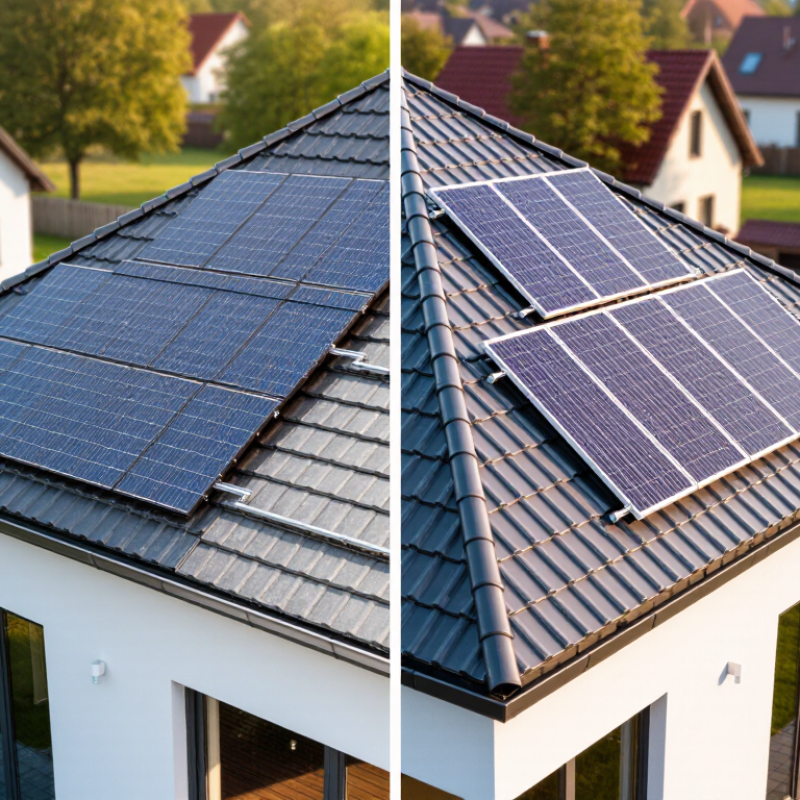
What Are Solar Roof Tiles and Traditional Solar Panels?
Solar roof tiles are photovoltaic roofing materials, not small panels simply placed on top. They replace some conventional shingles or tiles while generating electricity. Traditional solar panels are separate modules, fixed above the finished roof with rails, brackets, and wiring. The difference is structural. One system becomes part of the roof; the other sits on it.
The International Energy Agency Photovoltaic Power Systems Programme reported about 447 gigawatts of new solar capacity worldwide in 2023. That scale reflects the maturity of conventional modules, which are easier to test, replace, and reposition. Fraunhofer ISE’s Photovoltaics Report 2024 placed many commercial module efficiencies near 20–23%. Roof tiles can look cleaner, especially on highly visible roofs, but their output depends heavily on roof shape, ventilation, shading, and installation quality. Real roofs are messier. A complex roof may lose usable area through vents, skylights, and dormers. Tiles may also make repairs less straightforward because the energy system and weatherproofing overlap. That detail matters.
For homeowners, the comparison should include more than rated efficiency. Check annual energy yield, roof age, fire compliance, inverter access, warranty terms, and replacement procedures. The U.S. Department of Energy describes building-integrated photovoltaics as systems serving both building and energy functions. That dual role is useful, but it also creates trade-offs. My view is cautious: tiles suit new construction or full roof replacement, while traditional panels often offer clearer economics on a sound roof.
2026 Best Solar Roof Tiles vs Traditional Solar Panels?
What Are Solar Roof Tiles and Traditional Solar Panels?
Solar roof tiles integrate photovoltaic cells into roofing materials, creating a more seamless appearance but typically producing less power per square metre. Traditional solar panels are separate modules installed above the roof and generally provide higher power density. The chart uses representative midpoints from common industry ranges: approximately 120–180 W/m² for solar roof tiles and 180–230 W/m² for traditional solar panels. Actual performance depends on cell technology, roof orientation, shading, temperature, and installation quality.
How Solar Roof Tiles and Solar Panels Generate Electricity
Solar roof tiles and traditional solar panels generate electricity through the same photovoltaic effect. Sunlight strikes semiconductor cells and releases electrons. An internal electric field pushes those electrons into a usable direct-current flow. An inverter then converts it into alternating current for household appliances. NREL’s PVWatts documentation uses a default total system-loss assumption of 14%. Real output is lower than the nameplate rating. The IEA PVPS Trends 2024 report recorded more than 1.6 terawatts of global photovoltaic capacity by the end of 2023.
Traditional panels sit above the roof, supported by racks. This air gap helps ventilation and cooling. Fraunhofer ISE’s Photovoltaics Report 2024 places common crystalline-silicon module efficiencies around 20% to 23%. Roof tiles replace part of the roofing surface and use smaller integrated cell sections. Their electricity production depends strongly on roof direction, pitch, shade, and temperature. A clean-looking installation may still generate less power. That is easy to underestimate.
For a realistic 2026 comparison, measure annual kilowatt-hours, not appearance alone. NREL recommends evaluating local weather, system losses, tilt, and shading through performance models. On-site assessments often find shadows from chimneys or nearby trees changing the result substantially. Small details matter. Roof tiles can suit new construction or strict design requirements, while panels may offer simpler ventilation and servicing. The uncomfortable question is whether the integrated roof area receives enough sunlight to justify its higher installation complexity. Damage, replacement access, and future roof repairs also deserve careful checking.
Which Roofing Conditions Suit Each Solar Technology?
Choosing between solar roof tiles and traditional solar panels in 2026 starts with the roof, not the electricity bill.
Solar tiles suit a new build or a roof due for complete replacement. They replace some conventional roofing materials while producing electricity. Their integrated appearance works well on visible, architecturally sensitive roofs. Looks matter. However, complex roof shapes can increase installation time, material waste, and design costs. That trade-off is easy to underestimate.
Traditional panels usually fit best on a sound roof with many years of service remaining.
Installers can place them on the sunniest roof plane and avoid heavily shaded areas. This flexibility helps on large, simple roofs with strong framing. A professional inspection should check the decking, rafters, flashing, drainage, and wind exposure before mounting equipment. Do not cover failing shingles. Installer experience shows that hidden moisture can turn an attractive solar project into an expensive repair.
Low-slope, steep, fragmented, or shaded roofs need closer analysis.
Solar tiles may follow the roofline, yet repairs can be less straightforward if one unit fails. Panels are more visible, but technicians can remove, test, and replace them using familiar procedures. Local electrical, fire, structural, and planning requirements affect both technologies. Ask for a roof condition report, production estimate, maintenance plan, and written warranty terms. The choice is rarely perfect. Recheck the assumptions.
How to Choose the Best Solar Option in 2026
Choosing the best solar option in 2026 starts with your roof, not a product brochure. Solar roof tiles can create a cleaner appearance and work well during a new roof installation. They may be practical for homeowners who value design and have a suitable roof shape. Traditional solar panels often provide more flexible placement, easier servicing, and clearer performance comparisons. Looks matter, but output matters more.
Check your roof’s age, slope, shade, and usable area before comparing prices. A roof with afternoon shadows may produce less electricity than expected. Ask an independent installer for a shading report and estimated annual generation. Review your household’s electricity bills, including seasonal changes and future needs. An electric vehicle or heat pump can change the calculation. Do not rely only on the highest advertised efficiency.
Request itemized costs for equipment, labor, permits, monitoring, maintenance, and possible roof repairs. Confirm who handles warranty claims and whether replacement parts remain available. Check the installer’s licenses, insurance, training, and recent local projects. Current incentives and connection rules can change, so verify them with official authorities. A battery may improve evening use, but it can also extend the payback period.
My own preference would depend on the roof, not fashion. An integrated system can still be the wrong choice if repairs are difficult or production is limited. The cheapest quote may hide preparation work. Get at least three detailed assessments, then compare usable energy, lifetime costs, and service terms.
Conclusion
Solar roof tiles and traditional solar panels both convert sunlight into electricity, but they take different approaches. Solar roof tiles integrate photovoltaic cells directly into roofing materials, creating a more seamless appearance, while traditional panels are mounted above an existing roof. How do solar roof tiles compare with traditional panels? The answer depends on priorities such as visual design, energy output, budget, and installation conditions. Traditional panels often provide greater flexibility, easier maintenance, and strong efficiency, whereas solar tiles may offer a cleaner look and work well for new construction or complete roof replacements.
In 2026, homeowners should compare each option’s efficiency, upfront cost, long-term savings, durability, installation time, and repair requirements. Roof size, angle, shading, structural strength, and remaining roof life are also important factors. Solar tiles may suit properties where appearance and roof integration are essential, while traditional panels can be a practical choice for sound roofs that need added renewable energy capacity. The best solution is the one that balances performance, aesthetics, local conditions, and overall investment goals.
 ApexSun Solar
